«If only saving millions was always that easy!»
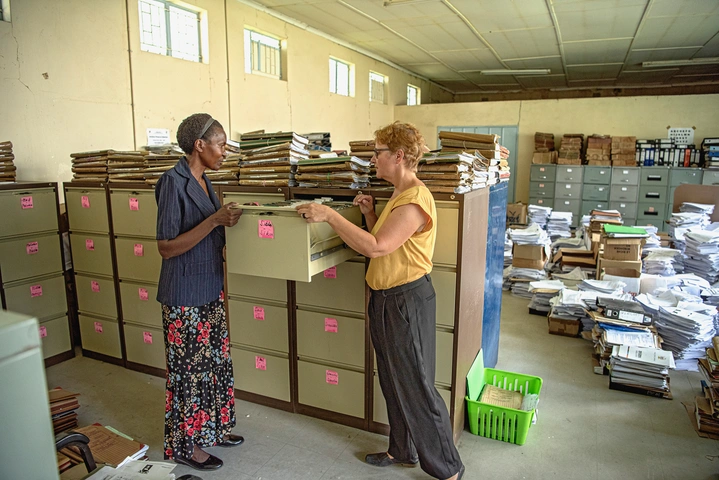
Since 1990, the Namibian Ministry of Education, Innovation, Youth, Sports, Arts and Culture has been supported by professionals who share the administrative management expertise and experience they have acquired in Switzerland. By bringing an outside perspective to local challenges, they are contributing to the development of more effective financial management within the Ministry, enabling vital savings to be made which can be reinvested in education.
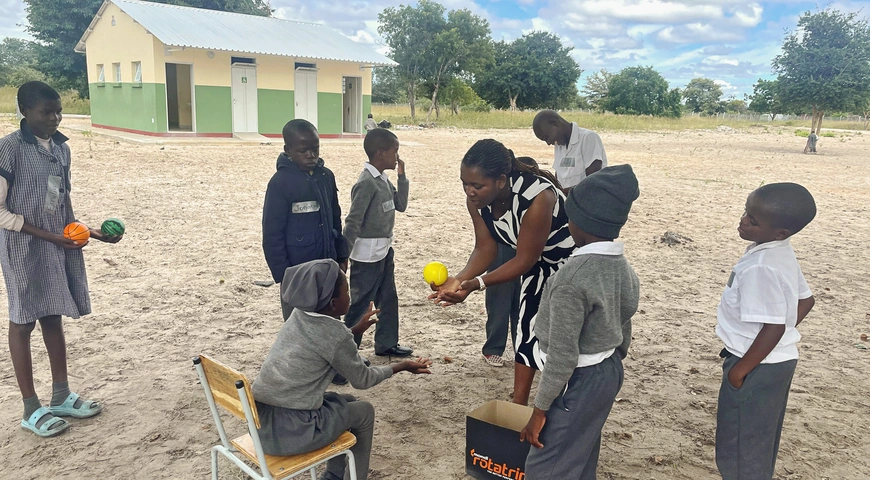
Photo: Comundo
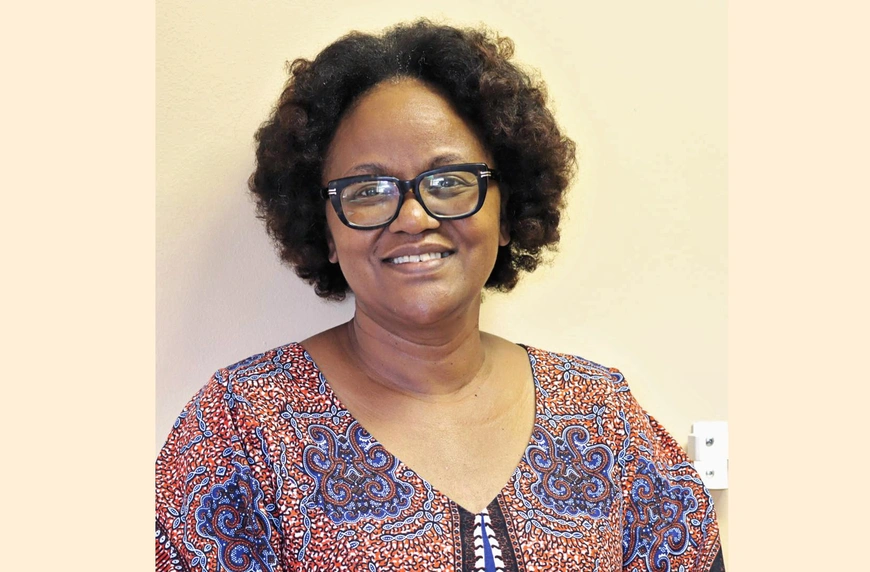
Levinia Karises holds a postgraduate degree in development finance and has spent 25 years in the financial management of Namibia's public service. First at the Ministry of Health and Social Services, where she served as financial advisor and later deputy director of finance and since 2011 within the Ministry of Education, Innovation, Youth, Sports, Arts and Culture. Today, as Director of Finance, she oversees the financial management of the ministry that receives the single largest share of Namibia's national budget. In this conversation with Unité, she spoke about the pressures facing the ministry, the reforms underway and what more than a decade of collaboration with Swiss NGO and Unité’s member organisation Comundo looks like in practice. Comundo is supporting the Ministry by assigning professionals as coworkers to local teams who share their management expertise and contribute to the Ministry’s efforts to enhance efficiency and effectiveness.
What are the key financial management challenges the Ministry is facing?
Levinia Karises: The main challenge with regards to finances is freeing up funds so that the ministry can fulfil its core educational mandate, which is providing equal opportunities and access to schools as well as increasing literacy and numeracy in our learners. The Ministry of Education is the largest recipient of Namibia's national budget. We receive approximately 28 billion Namibian dollars (about 1.3 billion CHF), which is about 32% of the entire national budget. However, of that 28 billion, 56% goes directly to staff-related costs like remuneration and benefits – leaving only 44% remains for other critical activities. Managing resources at this scale involves a significant degree of complexity, one of the biggest challenges is administering and overseeing payroll expenses. With over 42’000 employees, we are dealing with an enormous data set that is difficult to monitor and analyse consistently. Yet, implementing efficiencies in payroll spendings must be a priority for us, as then we have more funds for our core mandate.
How are you addressing this?
To achieve an optimisation in labour costs, we run two parallel processes. The first is an annual national payroll verification exercise, where finance and HR staff physically visit schools across the country to verify that every person on the payroll actually exists and is still in post. The second is monthly wage bill monitoring, where payroll data is extracted from our financial management system into a dedicated database that automatically generates reports – flagging double salary payments, incorrectly paid allowances, and spending trends by category. Together, these two tools allow us to catch irregularities early, avoid overspending and gradually free up funds that can be redirected to where they are most needed.
How have Comundo coworkers contributed to those efficiency gains?
Comundo coworkers work alongside our staff over extended periods, building tools together, training people and embedding new ways of working into daily practice. They become part of our teams and the achievements are the result of our common work. When we started the payroll verification exercise in 2013, it was entirely manual. Staff would travel to schools, come back with handwritten records and then have to enter everything into Excel by hand. It was slow, inconsistent and made proper reporting almost impossible. The first international coworker I worked with between 2014-2016 developed a standardised Excel tool that our verification teams could use directly in the field, trained staff across all 14 regions of Namibia on how to use it, and suddenly we had digitised data that we can analyse much more easily.
From there, each new assigned professional built on what the previous one had started. The monthly wage bill monitoring database – which I would say is the single tool that has saved us the most money – was developed by a subsequent coworker over the years 2019-2022. Another one, working with us in 2021-2024, then shifted the training online, reaching around 100 staff at a fraction of the cost. She deliberately brought together senior national and regional staff to deliver it jointly, so that the knowledge would stay with us when she left. Today we run the payroll verification entirely on our own, and our approach has since been adopted by other ministries.
Do you have another example from that collaboration?
Another great example is the utility efficiency project, which started in the Kavango East region, where a Comundo coworker did an extensive analysis of utility spending in schools between 2022-2024. This allowed us to uncover unnecessary spendings: schools paying connection fees for electricity they were not using, being billed for telephone lines that did not work, losing significant amounts of water through dripping taps or leaks, and in some cases paying for more internet bandwidth than they were actually receiving. Converting schools from conventional to prepaid electricity meters alone produced an average spending reduction of 55%, or around 1.5 million Namibian dollars annually. Closing unused landline accounts saved over 300’000 dollars a year on top of that. After the impact of those regional measures had become apparent, we scaled up the approach nationwide. A national steering committee now oversees implementation, schools across the country are being converted to prepaid meters and we continue to audit other overhead costs.
What is the secret behind successful collaboration?
What I particularly value is that most Comundo coworkers bring decades of professional experience, which means they arrive with deep practical knowledge. Where we lack a specific expertise or need a particular technical knowledge, they are able to fill that gap. The ones I worked with did not arrive with pre-packaged solutions but worked alongside our staff to analyse problems, design tools and build systems that we can eventually operate on our own. Critically, they adopted an advisory rather than directive role – decisions always remained our prerogative, but the coworkers provided the technical grounding to make those decisions well. The track record truly speaks for itself and the quality of the people we receive is outstanding.
What are the challenges when hosting coworkers?
The first is early departures. When a coworker leaves before the end of their contract, we lose momentum on work that is still in progress. The second and more structural challenge is dependency. In some regional offices, staff have become over-reliant on coworkers and coworkers themselves focus less on the mutual learning. When that expectation is set clearly, the collaboration usually works well, it just does not happen automatically everywhere.
How does this model of collaboration differ from other forms of international cooperation you have experienced?
How we collaborate with the coworkers from Switzerland is genuinely distinct from other forms of international cooperation we have experienced. When we receive technical assistance through organisations like UNICEF, it typically occurs in the form of a consultant who conducts desk reviews and interviews, produces a report and presents findings. We receive a document, but we have no ownership of the process and no capacity is built along the way. Our staff are involved only as sources of information.
The personnel development cooperation approach is the opposite. Coworkers are embedded in our teams, they work on real problems alongside real colleagues, and they leave behind tools, skills and systems that belong to us. That sense of ownership is what makes this model sustainable in a way that a consultant's report simply cannot be.